


Cannes Film Festival by Yacht: The Insider's Guide
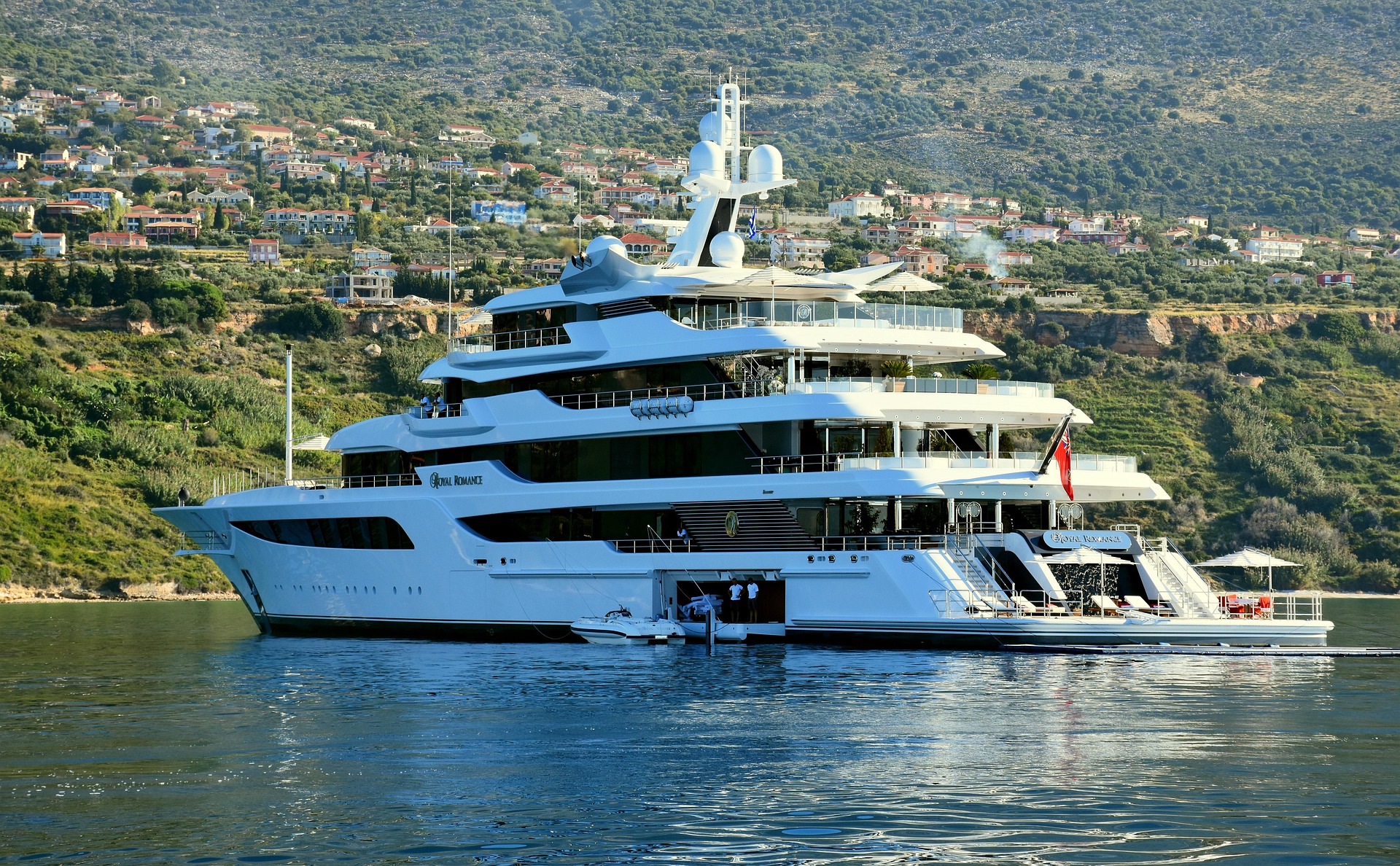
During the festival, Cannes turns to face the sea. The bay fills with yachts, the most sought-after parties are held on deck, and a charter becomes the most coveted base of the fortnight — part venue, part retreat, part vantage point.
For the two weeks of the festival each May, a yacht is the single most useful thing to have in Cannes — a private address steps from the action, a stage for hosting, and a way out when the crowds become too much. Here is how to use it well. For the wider experience ashore, see our guide to the Cannes Film Festival in luxury.
The berth beside the Palais
A yacht in the Vieux-Port sits steps from the Palais des Festivals and the red carpet — the most convenient address in Cannes when the streets are gridlocked and a car can take an hour to cross town. These berths are very few and reserved a year ahead. Beyond the port, a mooring in the Bay of Cannes offers the same atmosphere and the same skyline, with a short tender ride to the quay — often the more relaxed choice, and a more affordable one.
A stage for entertaining
The festival’s defining gatherings happen on the water. A chartered yacht gives you a private deck to host on — a dinner for key guests, a brand launch, a late drink away from the crush — with a professional crew and, if you wish, a chef to match. For those doing business at the festival, it is the most valuable room in Cannes.
The retreat
Just as valuable is the escape. When the Croisette overwhelms, the yacht slips out to a quiet anchorage off the Lérins islands — a swim, a long lunch, an afternoon of calm before the evening begins again. To return refreshed each night, while everyone ashore battles the crowds, is the festival’s best-kept advantage.
Book early, plan privately
The best yachts and berths are reserved six to twelve months ahead, and the prime port moorings far sooner. A concierge secures the charter, the berth and the hospitality as one, and coordinates the tenders, transfers and invitations around them. Many guests pair the yacht with a villa in the hills — see also our guides to renting a villa for the festival and how the elite experience it.

The Best Day-Cruise Itineraries from Cannes & Saint-Tropez
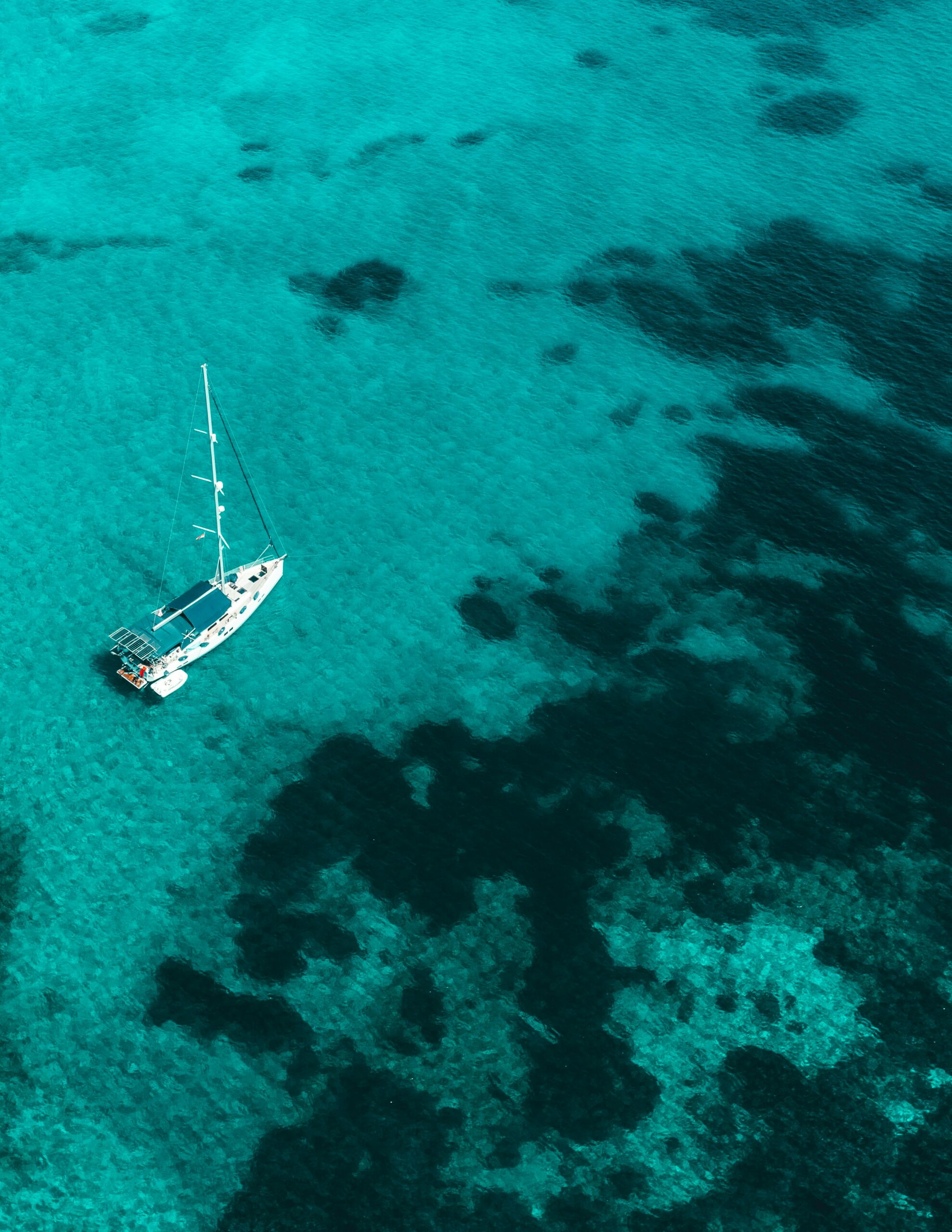
A day at sea is the Riviera at its most effortless — no schedule, no crowds, just the coast unrolling from the deck. From Cannes, Saint-Tropez and the eastern bays, a handful of itineraries stand above the rest.
A day cruise is also the easiest way into life on the water — a fixed day rate, catering to suit, and no week-long commitment. Each of the routes below can be arranged as a private day cruise, tailored entirely to your pace and party.
From Cannes: the Lérins islands
Just offshore from Cannes lie the Lérins — Sainte-Marguerite, with its pine forests and the fort that held the Man in the Iron Mask, and the tiny monastic island of Saint-Honorat, where the monks have made wine for centuries and still welcome visitors to taste it. Clear water, sheltered anchorages and a crossing of barely twenty minutes make this the perfect half-day, easily extended westward along the coast.
From Cannes: the Estérel calanques
West towards Saint-Raphaël, the red porphyry cliffs of the Estérel massif drop sheer into turquoise coves reachable only from the water. The contrast of red rock, green pine and blue sea is the most dramatic scenery on the western Riviera, and a swim in one of its hidden calanques — followed by lunch at anchor — is invariably the day’s highlight.
From Saint-Tropez: the peninsula and Pampelonne
From Saint-Tropez, the cruise follows the peninsula past Pampelonne’s beach clubs to the quiet coves of Cap Camarat and the Plage de l’Escalet beyond — with the option of lunch ashore at a club, or at anchor on board. It is the classic Tropezienne day on the water, and the best way to see both the spectacle and the seclusion of the coast in a single afternoon. See our guide to the best beach clubs to pair it with lunch.
From the eastern bays: Cap-Ferrat & Monaco
On the eastern coast, a cruise from Villefranche or Beaulieu rounds Saint-Jean-Cap-Ferrat — past its grand villas and the deep, clear water of its coves — with the option of continuing to Monaco for lunch in the harbour. It is the most glamorous stretch of shoreline on the coast, best appreciated from the sea.
The day, composed
The pleasure of a private cruise is that it bends to you — swimming and water toys, a chef’s lunch on board, a stop at a beach club, a glass of rosé as the light softens on the way home. A concierge arranges every detail, from the catering to the timing. For longer voyages, see our guides to choosing a yacht and what a charter costs, or the charter collection.
Chartering a Yacht for the Monaco Grand Prix: What to Know
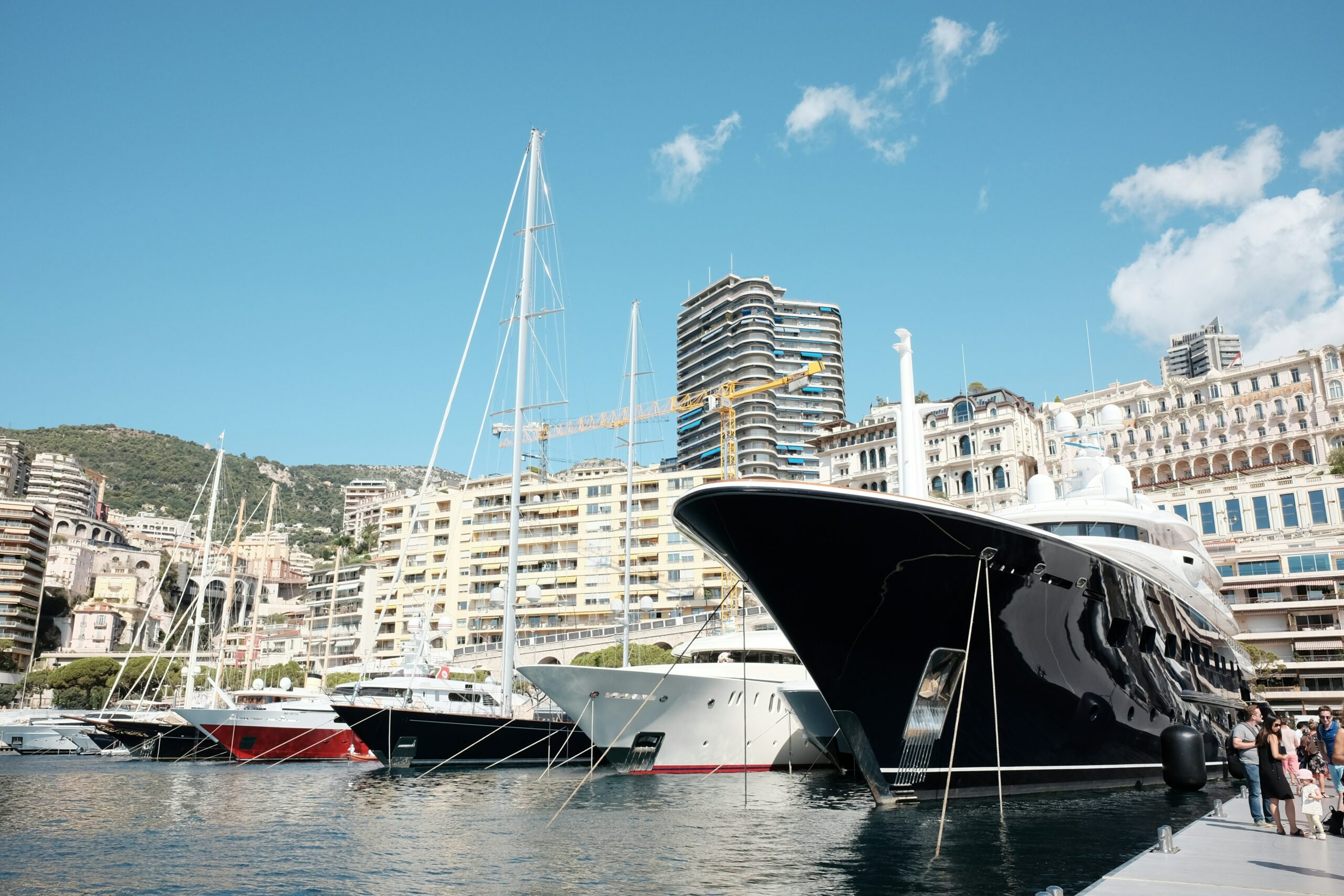
There is no finer seat at the Monaco Grand Prix than the deck of a yacht in Port Hercule. The cars thread the harbour-front, the circuit wraps around you, and the most glamorous race in the world becomes, for the weekend, your private grandstand.
Held each year in late May, the Monaco Grand Prix is the one race every Formula 1 driver wants to win and every guest wants to attend — and the harbour, packed gunwale to gunwale with superyachts, is its defining image. Here is how to be part of it. For the full weekend, see our guide to Monaco Grand Prix hospitality.
The berth is everything
The experience hinges entirely on the berth. A trackside mooring in Port Hercule places you within metres of the circuit, the Nouvelle Chicane and the swimming-pool section right before you, the cars audible long before they appear. An anchorage just outside the harbour offers the atmosphere, the flotilla and the spectacle without the trackside proximity — at a fraction of the cost. Both are wonderful; they are simply different commitments, and the finest harbour berths are very few.
The shape of the weekend
The race weekend builds across several days — practice on Friday, qualifying on Saturday (often the most thrilling session of all on this tight circuit), and the Grand Prix itself on Sunday afternoon. Around the racing runs a parallel calendar of parties, dinners and gatherings, much of it hosted on the yachts themselves. A charter lets you live at the centre of all of it, on your own terms.
Book a year ahead
Trackside berths sell out roughly a year before the race, and the best are held by returning guests from one year to the next. Late enquiries are not impossible, but they usually mean anchoring offshore rather than in the harbour. For Port Hercule itself, early commitment through a Monaco charter specialist is the only reliable route.
The weekend, composed
A Grand Prix charter is more than the race. Catering and hospitality on board, transfers through closed streets, paddock and grandstand access, and the surrounding events all require coordination — the work of a private concierge. Many guests pair the yacht with a residence ashore or on nearby Saint-Jean-Cap-Ferrat, a calm retreat twenty minutes from the noise. For other ways to watch, see our guide to the Grand Prix in style.
The harbour berths go a year ahead. Begin the conversation early.
How Much Does It Cost to Charter a Yacht on the French Riviera?
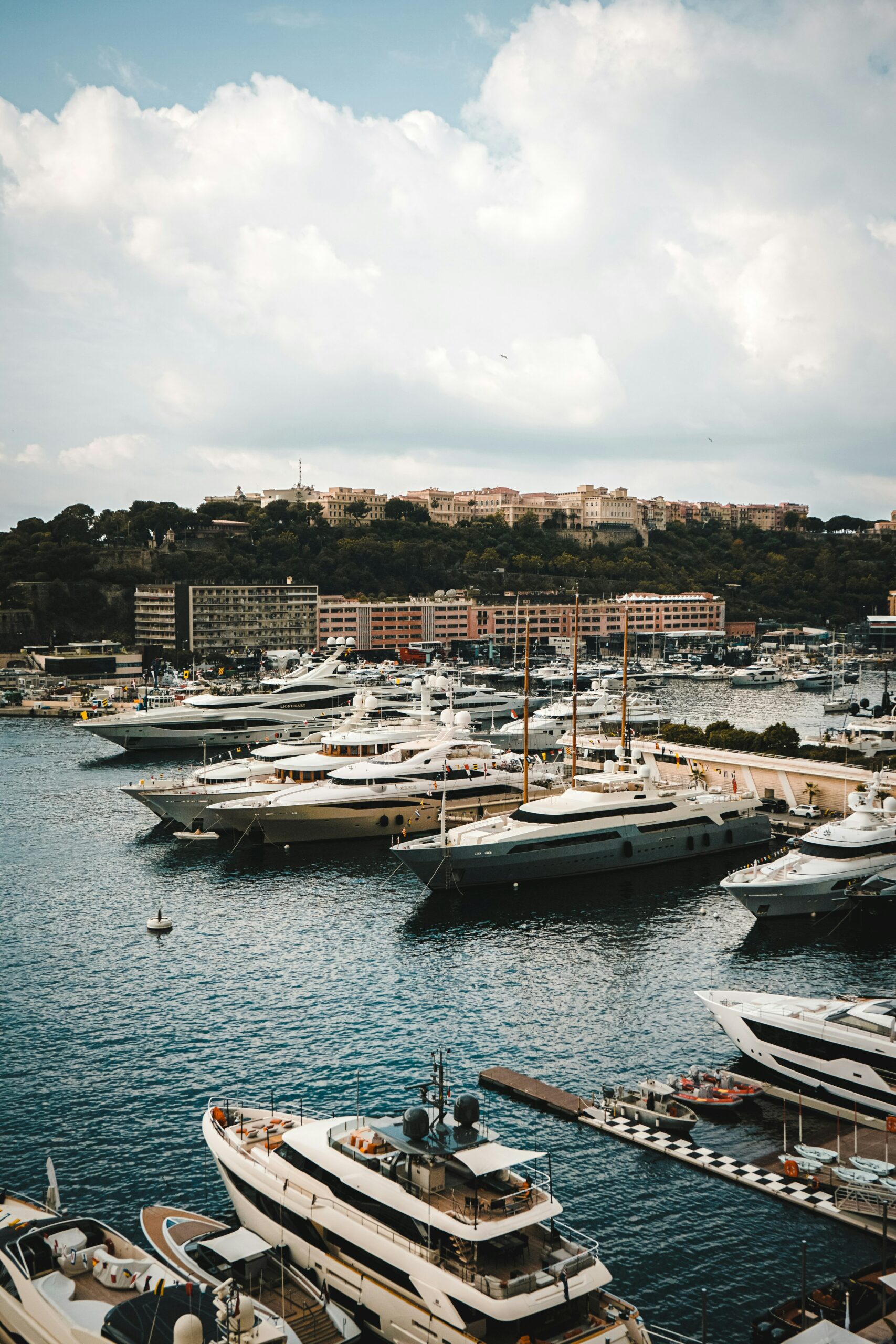
A week aboard a crewed yacht on the Riviera can be arranged from roughly €30,000 — or it can run to several million. As with villas, the headline figure is only part of the picture; understanding the structure is the key to chartering well.
Yacht charter is quoted differently from almost anything else in luxury travel: a base rate for the yacht and crew, plus a separate allowance for everything you consume along the way. Once you understand the two parts, the numbers become clear — and comparing one yacht to another becomes straightforward.
The base rate
The weekly base rate secures the yacht and its professional crew. It rises with length, volume, age, builder and amenities — a smaller sailing yacht sits at the lower end, while a large motor yacht or superyacht reaches the hundreds of thousands per week and beyond. Season matters too: July, August and event weeks such as the Cannes Film Festival and the Monaco Grand Prix command the highest rates of the year.
| Yacht size | Typical base rate / week | Best for |
|---|---|---|
| Sailing yacht, 20–30m | €30,000 – €80,000 | Couples, small groups, intimate cruising |
| Motor yacht, 25–35m | €60,000 – €150,000 | Families, entertaining, coastal range |
| Motor yacht, 35–50m | €150,000 – €450,000 | Larger parties, full crew and amenities |
| Superyacht, 50m+ | €500,000 – €2,000,000+ | The largest, most appointed charters |
The running costs (APA)
On top of the base rate sits the Advance Provisioning Allowance — the APA — typically around 30% of the base rate. It covers fuel, food, drink, port and marina fees, and similar running costs. You pay it ahead; the captain draws against it during the charter and reconciles it at the end, refunding what is unspent or asking you to top it up if you have been especially thirsty. Factoring the APA in from the start is what keeps the true cost free of surprises.
The other line items
- VAT on the charter, which varies with the itinerary and the time spent in each country’s waters.
- Crew gratuity, customary at roughly 5–15% of the base rate, at your discretion.
- Delivery or relocation fees, if the yacht must reposition to meet your itinerary.
A good broker sets all of this out clearly before you commit, so the figure you approve is the figure you pay.
What moves the figure
- Size & type: length and volume are by far the largest drivers.
- Season: high summer and event weeks cost most; spring and autumn ease considerably.
- Build & amenities: a newer, better-equipped yacht commands a premium.
- Itinerary: distance covered affects fuel and provisioning within the APA.
- Motor vs sail: a comparable motor yacht generally costs more — see our guide to choosing between them.
A lighter way in
If a full week is more than you need, a day cruise offers the experience at a fraction of the commitment — typically a fixed day rate with catering arranged to suit, and no APA to manage. It is also the ideal way to test how you like life aboard before booking a longer charter. See our guide to the best day-cruise itineraries.
Tell us your dates, your party and your itinerary — we will return clear, all-in figures.
To explore the options, begin with the charter collection, and pair it with a villa on the coast.
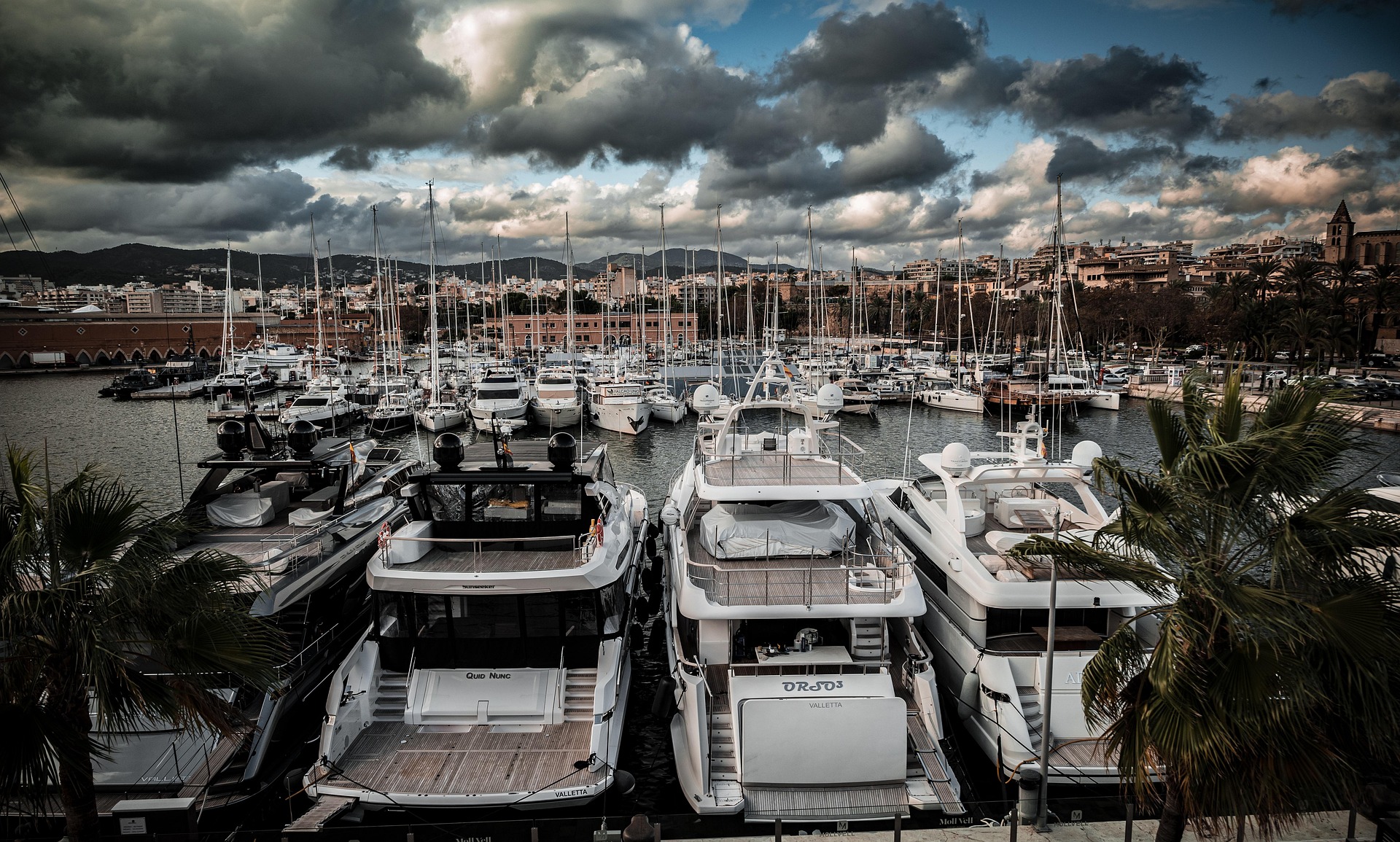
Motor Yacht vs. Sailing Yacht: Which to Charter on the Riviera
The choice between a motor and a sailing yacht is really a choice about how you want the days to feel — fast and generous, or quiet and elemental. Both are wonderful ways to see the coast; they simply offer different pleasures.
It is the first question every charter begins with, and the answer shapes everything that follows — the pace of your days, the guests you can host, the anchorages you can reach and the budget you commit. Below, the real differences, the practical trade-offs, and how to decide.
- Choose motor for space, speed, stability and entertaining — the default for most Riviera charters.
- Choose sail for intimacy, serenity, calmer anchorages and the romance of the sea.
- Budget: a comparable motor yacht generally charters for more per week.
- Either way the yacht comes fully crewed; you simply step aboard.
The motor yacht
A motor yacht is the natural choice for space, speed and stability. It covers distance quickly — Saint-Tropez to Monaco between lunch and dinner — carries more guests in greater comfort, and offers the volume for proper entertaining. Wide decks, a generous saloon, often a jacuzzi and a full complement of water toys; this is the yacht for those who want the sea as a stage as much as a journey. For most charters on the Riviera, it is the default for good reason.
The trade-offs are real but modest for most guests: higher running costs, a deeper draught that keeps you out of the shallowest coves, and an experience driven by the engines rather than the wind.
The sailing yacht
A sailing yacht trades pace for romance — the quiet of moving under sail, a shallower draught for tucking into calmer anchorages, and a more intimate, elemental rhythm. The decks are more compact and the layout closer-knit, which many find part of the charm. For those who love the sea itself, and who measure a day by the wind rather than the itinerary, nothing else compares.
A modern crewed sailing yacht is far from spartan — comfortable cabins, fine dining, attentive crew — but it asks you to move at the coast’s pace rather than your own, which is precisely its appeal.
The practical differences, side by side
- Space & guests: motor yachts offer more of both for a given length.
- Speed & range: motor yachts cover more coastline in a day; sailing yachts take their time.
- Anchorages: a sailing yacht’s shallower draught reaches quieter, more sheltered coves.
- Atmosphere: motor yachts are made for entertaining; sailing yachts for intimacy.
- Cost: comparable motor yachts generally charter for more, base rate and running costs alike.
- Stability: motor yachts sit steadier at anchor and underway — worth weighing for less experienced guests.
Which suits your party?
A large group, young children or a week built around hosting points firmly to motor. A couple, a few close friends, or anyone who finds the silence of sail the whole point will be happier under canvas. And for those torn between the two, a day cruise on each is the simplest way to feel the difference before committing to a week.
Making the decision
If you plan to entertain, cover distance and prioritise comfort, choose motor. If you want serenity, intimacy and the feel of the sea, choose sail. Either way, a concierge will match the specific yacht and crew to your party and your itinerary. For figures, see our guide to what a charter costs, or begin with the yacht charter collection.